
Go Convenience store Ready
zameCasual
3.3156.00 Reviews
- Version
- 1.2.13
- Installs
- 10.00M
- Age Rating
- Everyone
Screenshots
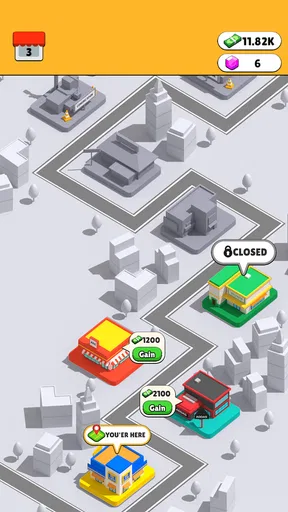
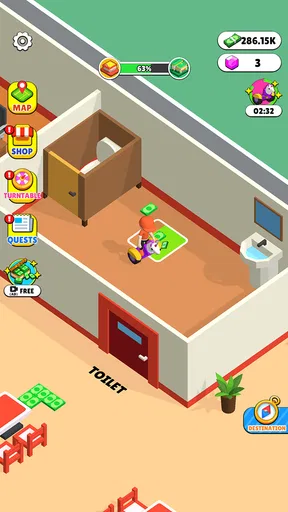
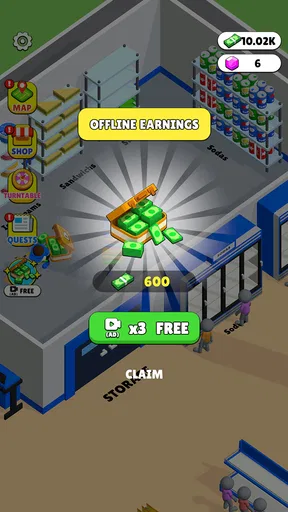
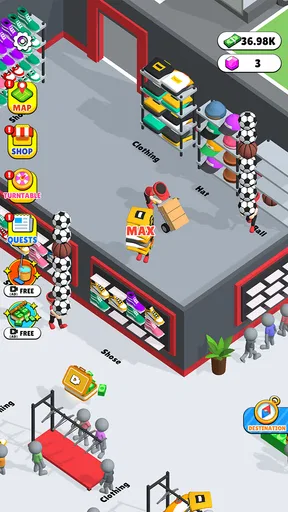
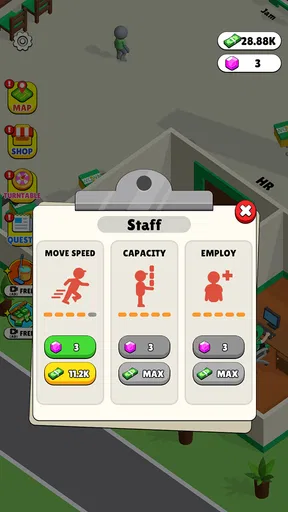
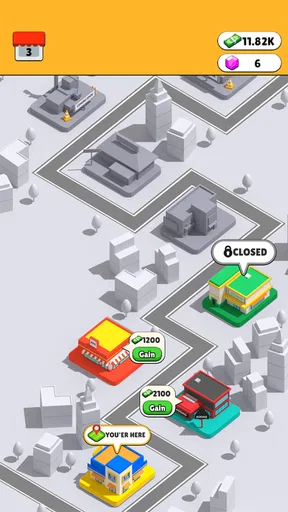
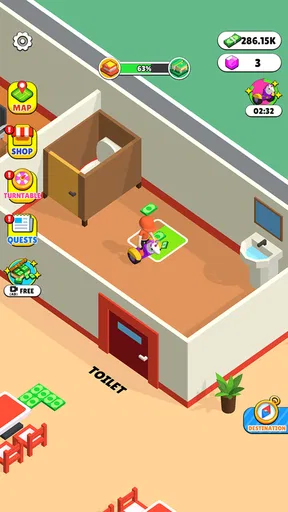
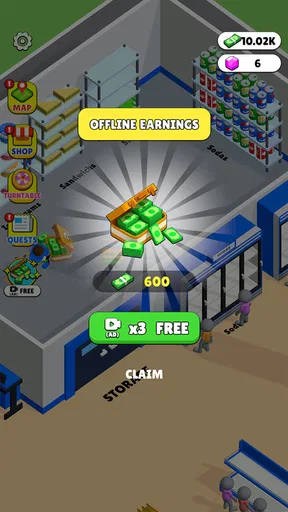
Our Review of Go Convenience store Ready
 Analysis by Appyee
Go Convenience Store Ready is the kind of casual game I can open without preparing myself for a long commitment. Its appeal is immediate: it presents a light simulation experience built around the idea of running or managing a convenience store, then lets me settle into a simple rhythm instead of demanding complicated rules. That makes it easy to try during a spare moment, although the same simplicity can become its main weakness if I am looking for deep strategy or a constantly changing challenge.
After spending time with it, my view is fairly clear. This is best approached as a small, low-pressure pastime rather than a serious management simulator. It is free to start, suitable for Everyone, and available for Android devices running version 8.0 or later. The developer is zame, and the game has already passed over ten million installs, so it is not an obscure experiment. Still, popularity does not automatically make it the right fit: the important question is whether its short, repetitive store-focused sessions match the way you like to play.
Why the first few minutes work
The strongest part of the experience is how quickly I understand what I am supposed to do. I do not need to study a dense tutorial or learn a complicated set of systems before the game starts feeling like a game. The convenience-store setting gives the activity a familiar frame, and the casual presentation keeps the first session approachable.
That instant readability matters more here than visual spectacle. I can open the game while waiting for something, make some progress, and leave without feeling that I have abandoned a long quest. The store summary describes it as a leisure-oriented simulation, and that is a fair way to understand the mood. It is designed for relaxed interaction, not pressure, competition, or a demanding campaign.
I also like that the premise creates a modest sense of ownership. Even simple store tasks feel more satisfying when I can connect them to the idea of improving a place over time. The pleasure is not in mastering a complex economy; it is in seeing small actions contribute to a familiar retail setting. That distinction is important. If you enjoy watching a compact operation become more orderly or productive, the setup is inviting. If you need a detailed business model with serious financial decisions, it will feel thin.
One practical tip is to judge the game by its first short session rather than by its install count or store rating. The average sits at 3.3 from roughly 5.7 thousand ratings, which suggests a mixed audience rather than universal approval. In my experience, that makes sense: the basic loop is accessible, but players who expect more depth may quickly notice its limits.
A rhythm made for spare minutes
The game’s natural session length is one of its clearest strengths. I found it easier to enjoy when I treated each visit as a small check-in instead of trying to force a long play period. There is a pleasant feeling in completing a few actions, seeing the store move forward, and closing the app before the experience has time to become tiring.
This makes it suitable for everyday situations where attention is divided. I could imagine playing while waiting for an appointment, taking a short break from work, or relaxing for a few minutes before bed. It does not ask me to remember a large story, coordinate with other players, or protect a long chain of progress. The low mental load is exactly why it can fit into a busy day.
At the same time, the rhythm is not equally satisfying for everyone. A short-session game needs its individual actions to feel worthwhile. When the available activity becomes too familiar, the convenience of a quick visit can turn into a sense of going through motions. I would not recommend installing this expecting every session to offer a fresh surprise. Its pleasure comes from repetition with light progress, not from constant discovery.
That trade-off also affects how I compare it with other casual simulation games. Larger management titles usually offer more buildings, more resources, or more elaborate objectives, but they demand more attention and often make a player feel responsible for a bigger system. Go Convenience Store Store Ready is easier to pick up, yet it gives up some of that long-term complexity. It is closer to a quiet routine than a full business-management challenge.
How to play without turning it into a chore
My most useful approach was to give each session a small purpose. Instead of opening the game and tapping through everything automatically, I would decide whether I wanted to make immediate progress, tidy up a particular part of the store, or simply spend a few relaxed minutes with the simulation. That small choice helped the loop feel less mechanical.
I also found it helpful not to chase every possible improvement at once. Casual management games can become less enjoyable when I treat every available action as an obligation. Here, the better experience comes from accepting that progress can be gradual. If I try to optimize every visit, the game starts to resemble a checklist; if I focus on one visible goal, the same systems feel more rewarding.
A second useful insight is to separate entertainment value from efficiency. The fastest route through a game is not always the most pleasant one. Because this title is built for leisure, I would rather let the store develop at a comfortable pace than turn the experience into constant resource accounting. Players who enjoy optimizing every decision may find that approach frustrating, but players who want a gentle routine may appreciate it.
Returning after an interruption
Go Convenience Store Store Ready works best when I can leave and return without rebuilding my mental context. That is a major part of its casual identity. I do not want a short break to create confusion about what I was doing, and this game generally benefits from its straightforward premise. The store remains the central focus, so coming back feels more like resuming a familiar task than restarting a complicated plan.
This is especially useful for people who play in fragments. A game can be technically simple yet inconvenient if it punishes interruptions, hides important information, or expects long uninterrupted sessions. The store simulation format is naturally better suited to stopping and starting than a story-heavy adventure or a strategy game with lengthy turns.
My advice is to close the game when the session stops feeling pleasant. There is little value in extending a casual game past the point where the routine becomes dull. Returning later with a little distance can make the small improvements feel more visible. This is a different mindset from competitive games, where leaving early may mean losing an opportunity. Here, the ability to pause is part of the attraction.
That said, I would not describe it as a perfect solution for every interrupted-play situation. Anyone searching for a game that delivers a complete, memorable experience in a single minute may prefer a puzzle or arcade title with a clear beginning and end. Go Convenience Store Store Ready is more gradual. A short visit is enjoyable, but its satisfaction often depends on the sense that the store is part of an ongoing routine.
Free access and the purchase question
The game is free to download, which lowers the barrier to trying it. There are in-app purchases ranging from $2.99 to $9.99 per item, so I would recommend deciding early how you want to approach optional spending. For me, the most comfortable way to play is to treat purchases as conveniences rather than requirements. If I start feeling that I must pay to make ordinary progress enjoyable, the relaxed appeal disappears.
This is one of the questions a new player is likely to have: can the game be approached casually without immediately spending money? My answer is that the free entry makes experimentation sensible, but the value of purchases depends on how patient you are with the game’s natural pace. Someone who wants to accelerate progress may consider the items worthwhile; someone who prefers a calm, no-pressure routine should be careful not to let optional upgrades change the way they judge the experience.
I would also avoid comparing the price structure directly with premium casual games without considering the difference in commitment. A paid game may offer a cleaner, more self-contained experience from the beginning, while this free model lets me test whether the store loop suits me before paying anything. The trade-off is that the in-app purchase model can make progression feel less purely recreational for players who are sensitive to monetization.
Where the repetition helps and where it wears thin
Repetition is not automatically a flaw in this game. In fact, it is the foundation of its comfort. Repeating familiar store actions can be satisfying when I am tired and want something predictable. There is no need to learn a new rule every few minutes, and that makes the game easy to use as a mental break.
The problem is replay value. A game built around a stable routine needs enough variation in goals or decisions to keep returning sessions meaningful. Go Convenience Store Store Ready offers a pleasant reason to check back in, but I would not call it an endlessly engaging simulation. Its replay value depends heavily on whether you enjoy incremental development and repetition for their own sake.
This is where it differs from more feature-heavy alternatives. A deeper store-management game may keep me interested through changing customer demands, more complex supply decisions, or broader strategic choices. Those games can be more rewarding over many hours, but they also require more concentration. This title makes the opposite choice: less friction, less cognitive effort, and a smaller range of long-term possibilities.
For a practical test, I would ask myself one question after several sessions: am I opening the game because I have a small goal, or only because the habit has become automatic? If there is still a specific improvement I want to see, the loop is working for me. If I am tapping through the same routine without interest, it may be time to switch to something with stronger variety. That is not necessarily a failure; it is simply the natural limit of a lightweight simulation.
Who will enjoy the store routine
I think the game is a good match for players who like gentle management, familiar settings, and progress that can be made in small pieces. It can also suit someone who is new to simulation games and wants an approachable introduction without being overwhelmed by a large interface or a complicated economy.
It is particularly appealing if you enjoy the feeling of maintaining a small virtual place. The convenience-store theme gives the routine a concrete identity, so the activity feels more grounded than an abstract collection of upgrade menus. That setting may also appeal to players who prefer everyday subjects over fantasy battles or dramatic stories.
On the other hand, I would skip it if my priority were deep strategy, strong narrative, competitive play, or a constantly changing challenge. It is also not the best choice for someone who dislikes repeated actions or becomes frustrated by free-to-play systems with optional purchases. A premium simulation, a puzzle game with self-contained rounds, or a more advanced management title would be a better alternative depending on what I wanted from the session.
Device fit and practical expectations
The current version is 1.2.13, and the game runs on Android 8.0 or later. That makes it accessible to people using a range of Android devices, including phones that are not among the newest models. Still, compatibility alone does not tell me whether the experience will feel ideal on every screen. The best way to decide is to try the free version and see whether the interface and pacing feel comfortable on my particular phone.
The Everyone age rating also matches the game’s approachable positioning. I would consider it suitable for a broad audience looking for a mild casual activity, while remembering that younger players may still need guidance around optional purchases. The rating describes the intended audience, but it does not change the importance of setting sensible spending boundaries.
The install figure, now above ten million, tells me that the concept has reached a wide audience, but I would not use that alone as proof that it will hold my attention. Large reach is useful reassurance that the game is easy to discover and broadly approachable; it says less about whether its repetitive rhythm matches my personal taste.
My casual verdict
After looking at the game through the lens of short sessions, interruption tolerance, immediate pleasure, and replay value, I see Go Convenience Store Store Ready as a pleasant but limited casual simulation. Its best quality is its low entry cost in terms of attention. I can understand the setting quickly, enjoy a few actions, and leave without feeling that I have failed to complete a major task.
The experience is strongest when I want a quiet routine rather than a demanding game. It gives everyday downtime a small sense of purpose, and the convenience-store theme makes the progress easy to understand. The free starting point is another advantage because I can test the loop before deciding whether optional purchases have any place in my play style.
My reservation is that the same clarity can become repetition. The game does not appear designed to replace a deep management simulator, and players who need constant novelty may lose interest. I would also keep an eye on how in-app purchases affect my sense of progress, especially if I prefer a completely uninterrupted free experience.
My recommendation is simple: try it when you want a calm, stop-and-start store routine, not when you want a full business simulator. For short breaks, relaxed evenings, and players who enjoy gradual improvement, it can be an easy companion. For serious strategy fans or anyone who needs substantial replay variety, another casual management game will probably provide more lasting value.
In the end, I would recommend giving it a fair trial rather than judging it by the mixed rating alone. Spend a few sessions noticing how the repetition feels, whether returning after a break is comfortable, and whether the free progression keeps the experience enjoyable. If those three things work for you, this small store simulation can deliver exactly the kind of uncomplicated pleasure it aims for.
Verdict
Strengths of Go Convenience store Ready
- Quickly locate nearby Go Convenience stores and check available services.
- Convenient access to store promotions, deals, and loyalty benefits.
- Useful store information helps plan visits before leaving home.
- Simple interface makes essential features easy to find.
- Can save time by reducing the need to search for store details manually.
Limitations of Go Convenience store Ready
- Store information may vary by location and may not always be up to date.
- Some features may require location access or other device permissions.
- Promotions and rewards can differ between participating stores.
- The app is less useful in areas without nearby Go Convenience locations.
- Availability of ordering or delivery features may depend on the selected store.
Similar Picks in This Category
View All
My Talking Angela
Outfit7 Limited4.2

My Talking Tom
Outfit7 Limited4.3

Pou
Zakeh4.2

My Talking Tom 2: Pet Game
Outfit7 Limited4.3

Candy Crush Saga
King4.6

Bridge Race
Supersonic Studios LTD4.1
Frequently Asked Questions
What is Go Convenience store Ready?
Go Convenience store Ready is a mobile shopping and convenience-store service app designed to help users browse available products, check promotions, and place orders from participating Go stores. Depending on your location, it may support options such as in-store pickup, delivery, or streamlined checkout. The exact catalog, services, and store availability can vary by region, so checking your local store before ordering is recommended.
How do I place an order in Go Convenience store Ready?
After installing the app, users generally need to select a participating store, browse categories, add products to the shopping basket, and review the order before confirming payment. The app may request an address or pickup preference, depending on the available service. Product availability can change quickly, particularly for snacks, drinks, and promotional items, so the final confirmation screen should always be checked carefully.
Does Go Convenience store Ready offer delivery or store pickup?
The available fulfillment method depends on the store, city, and local service coverage. In supported areas, the app may allow customers to choose home delivery, while other locations may provide pickup at a selected convenience store. Delivery fees, minimum order values, estimated arrival times, and pickup instructions can differ, so users should review these details during checkout before completing an order.
Is Go Convenience store Ready free to download and use?
The application may be free to download, but using certain services can involve additional costs. Orders may include delivery charges, service fees, taxes, or other location-based expenses, and some promotions may have specific conditions. Before confirming a purchase, review the complete price breakdown. The app could also require an account, phone number, or payment method to access ordering features.
What should I check before downloading Go Convenience store Ready?
Before downloading, confirm that the app is officially available in your country and that nearby Go Convenience stores participate in the service. It is also worth checking device compatibility, required permissions, payment options, privacy information, and recent user feedback. If you only need occasional store information, the app may be more extensive than necessary; frequent customers may benefit most from its ordering and promotion features.
Play our best games!


